Tag: Python

Coding towards CFA (5) – Currency Swap Pricing and Valuation

Coding towards CFA (5) – Currency Swap Pricing and Valuation

In this blog series, I will aim to code the formulas and model algorithms covered in the CFA Level 2 program using Python and DolphinDB. Each topic will begin with a brief explanation of the formulas or algorithms, followed by their implementations in Python and DolphinDB. A currency swap is a financial agreement where two … Continue reading Coding towards CFA (5) – Currency Swap Pricing and Valuation

Coding towards CFA (4) – Interest Rate Swap Pricing and Valuation

Coding towards CFA (4) – Interest Rate Swap Pricing and Valuation

In this blog series, I will aim to code the formulas and model algorithms covered in the CFA Level 2 program using Python and DolphinDB. Each topic will begin with a brief explanation of the formulas or algorithms, followed by their implementations in Python and DolphinDB. An Interest Rate Swap (IRS) is a financial derivative … Continue reading Coding towards CFA (4) – Interest Rate Swap Pricing and Valuation

Coding towards CFA (3) – Bond Futures Pricing

Coding towards CFA (3) – Bond Futures Pricing

In this blog series, I will aim to code the formulas and model algorithms covered in the CFA Level 2 program using Python and DolphinDB. Each topic will begin with a brief explanation of the formulas or algorithms, followed by their implementations in Python and DolphinDB. Bond futures are financial contracts that obligate the buyer … Continue reading Coding towards CFA (3) – Bond Futures Pricing

Coding towards CFA (2) – FRA Pricing & Valuation

Coding towards CFA (2) – FRA Pricing & Valuation

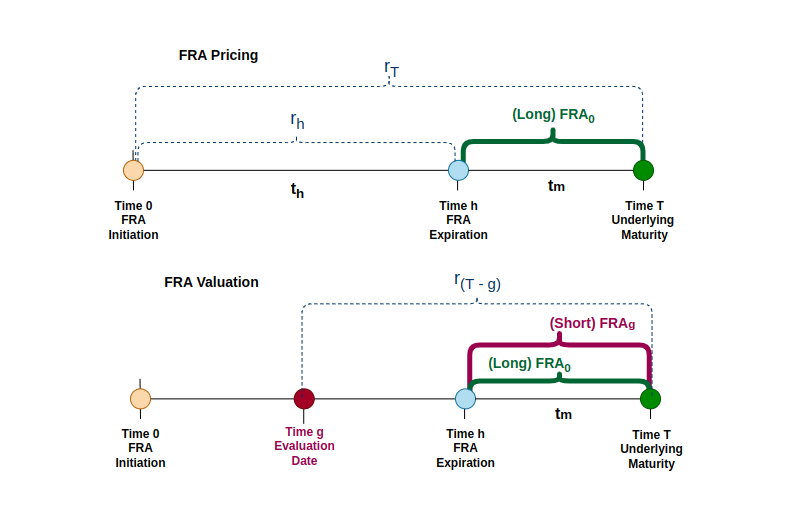
In this blog series, I will aim to code the formulas and model algorithms covered in the CFA Level 2 program using Python and DolphinDB. Each topic will begin with a brief explanation of the formulas or algorithms, followed by their implementations in Python and DolphinDB. This blog post focuses on pricing and valuing forward … Continue reading Coding towards CFA (2) – FRA Pricing & Valuation

Coding towards CFA (1) – Forward Contract Pricing & Valuation

This blog post focuses on pricing and valuing forward contracts for underlying assets with or without carry costs and benefits, as well as pricing stock index forward contracts. In this blog series, I will aim to code the formulas and model algorithms covered in the CFA Level 2 program using Python and DolphinDB. Each topic … Continue reading Coding towards CFA (1) – Forward Contract Pricing & Valuation

Why Bother to Use Pandas “Categorical” Type in Python

When we process data using Pandas library in Python, we normally convert the string type of categorical variables to the Categorical data type offered by the Pandas library. Why do we bother to do that, considering there is actually no difference with the output results no matter you are using the Pandas Categorical type or … Continue reading Why Bother to Use Pandas “Categorical” Type in Python

Scaffolding Azure Machine Learning Experiments

*please download the source code here Microsoft has released the public preview of their newest data science service, Azure Machine Learning, that contains a collection of components to support the end-to-end machine learning solution. The Azure Machine Learning Workbench and the Azure Machine Learning Experimentation service are the two main components offered to machine learning practitioners … Continue reading Scaffolding Azure Machine Learning Experiments

Evaluate Feature Importance using Tree-based Model

Tree-based model can be used to evaluate the importance of features. In this blog post I go through the steps of evaluating feature importance using the GBDT model in LightGBM. LightGBM is the gradient boosting framework released by Microsoft with high accuracy and speed (some test shows LightGBM can produce as accurate prediction as XGBoost … Continue reading Evaluate Feature Importance using Tree-based Model

Tuning Hyper-Parameters using Grid Search

Hyper-parameters tuning is one common but time-consuming task that aims to select the hyper-parameter values that maximise the accuracy of the model. Normally, cross validation is used to support hyper-parameters tuning that splits the data set to training set for learner training and the validation set to test the model. Python scikit-learn package provides the GridSearchCV class … Continue reading Tuning Hyper-Parameters using Grid Search