Exploring the future of financial data architecture: AI-native financial data foundation, large-scale financial data processing, and financial AI safety & governance
I have been planning the UX components and research engine for QuantFlow. I thought both would become key pillars of the platform. The UX layer would simplify how engineers build data pipelines and how quants interact with data. The research engine would automate large parts of the quant research workflow, allowing users to focus on … Continue reading I Was Wrong: the Users of QuantFlow Won’t be Human→
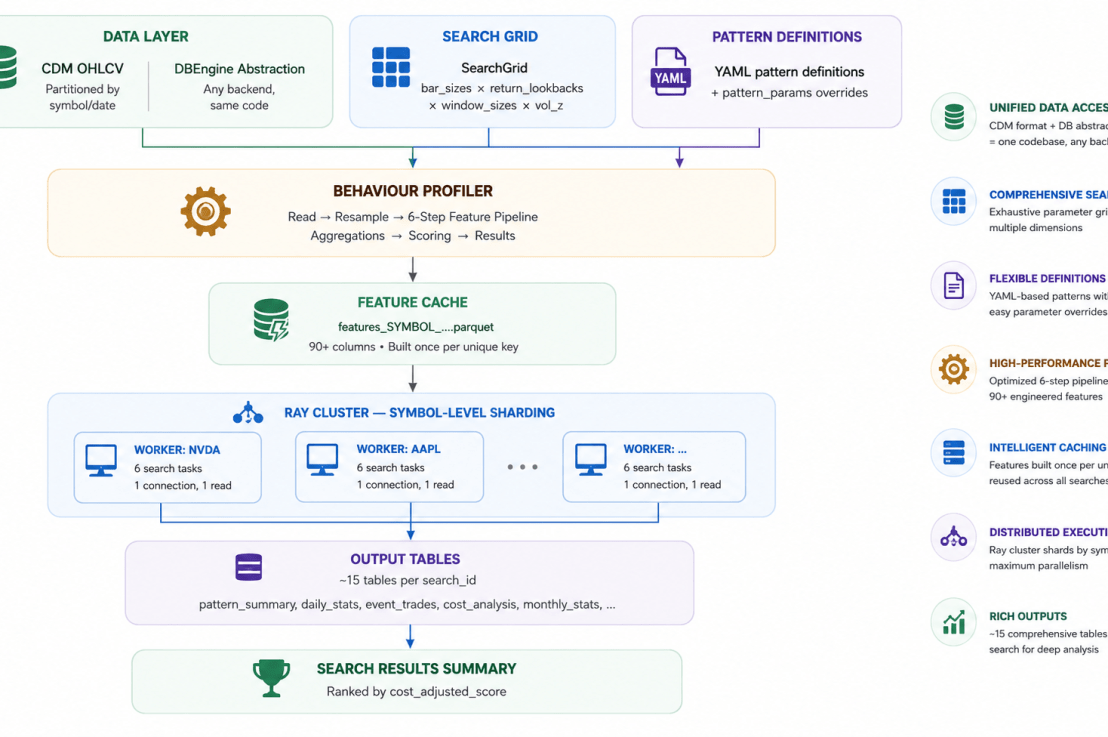
Every stock behaviour pattern has parameters. A compression breakout depends on the rolling window. A VWAP reclaim depends on the volume threshold. A failed breakout depends on the forecast horizon. Change one number and a "profitable" pattern becomes noise. The typical workflow: tweak a parameter → rerun → query results → squint at a table … Continue reading QuantFlow: Brute-Force Grid Search for Stock Behaviour Patterns→
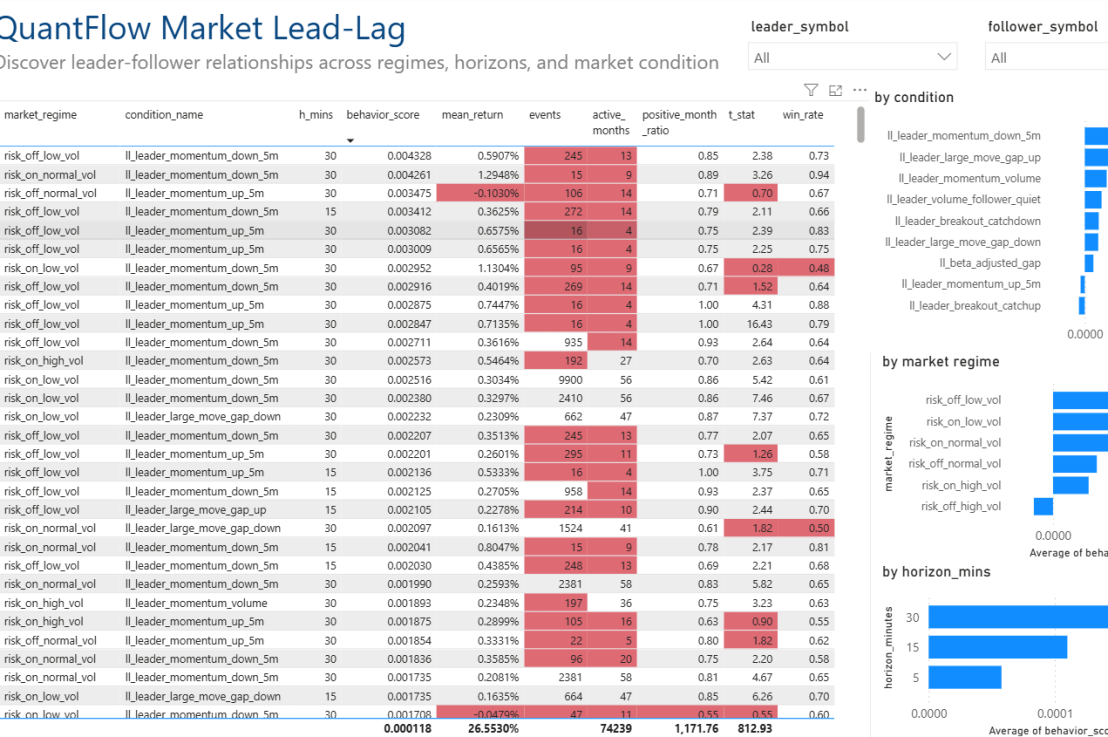
Context: Some trading ideas often pop into my mind unexpectedly, but most of the time I am too lazy to investigate them further. The root cause of this "laziness" is not the effort required to explore the idea itself, but rather the amount of pre-work needed before I can actually start working on it. Collecting … Continue reading QuantFlow: Detecting Trading Opportunities Through Market Lead-Lag Profiling→
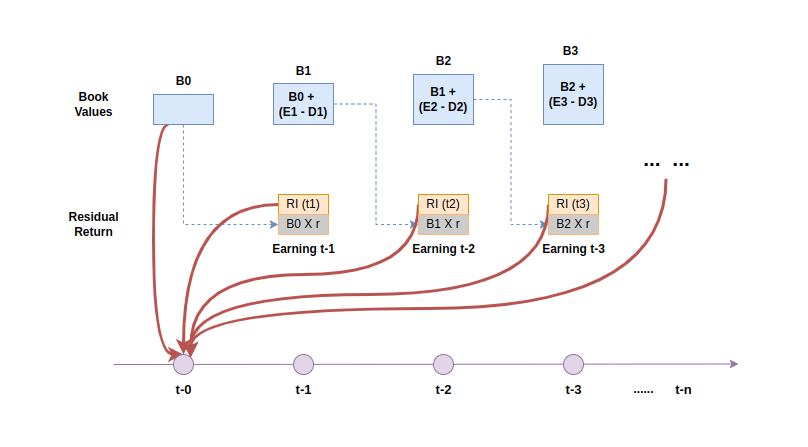
The Residual Income Model is one of the equity valuation methods covered in the CFA Level 2 curriculum. This method estimates the intrinsic value of a stock based on the stock's current book value, plus the present value of expected future residual income. Residual income represents the income generated by the company in excess of … Continue reading General Residual Income Model for Equity Valuation→
In the previous blog post, we explored the historical approach for estimating the Equity Risk Premium (ERP). The historical approach is a widely used method that is simple to implement. However, it relies on the assumption that the future will resemble the past, which often does not hold true in financial markets. In this blog post, we will … Continue reading Equity Risk Premium Estimates using Forward-Looking Approach→
In this blog post, I will begin exploring the topic of equity valuation, one of the most emphasised areas in the CFA Level 2 curriculum. Before delving into the various equity valuation models, I intend to use this and the next few blog posts to discuss how to estimate the equity risk premium (ERP) and … Continue reading Equity Risk Premium Estimates using Historical Approach→
This is another code-less blog post in my "Coding Towards CFA" series. The concepts of the Cobb-Douglas Production Function and the Neoclassical Growth Model are too important to skip, which is essential for building a strong foundation in economics and of course for pass on the CFA exam. Neoclassical growth theory is a framework for understanding economic growth, analysing how the … Continue reading Cobb-Douglas Production Function and Neoclassical Growth Model→
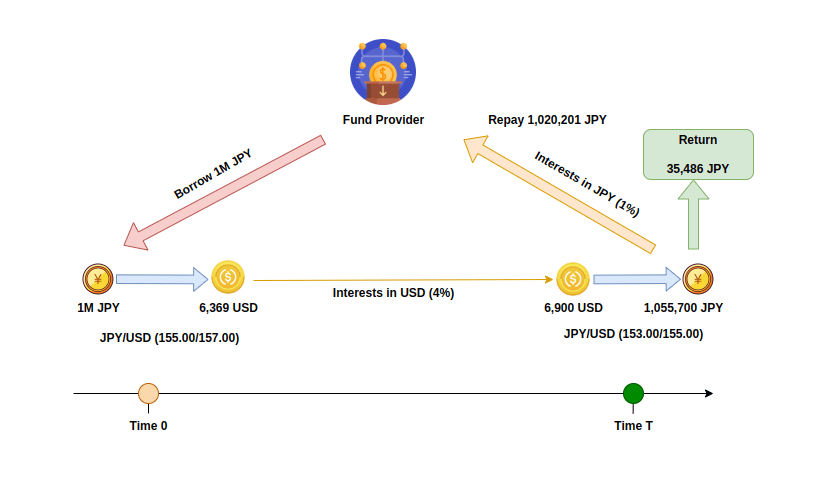
As discussed in the previous blog post, under the Uncovered Interest Rate Parity condition, the expected change in the exchange rate between two currencies should theoretically offset the interest rate differential between them. This would eliminate any opportunity for investors to profit from interest rate differentials. Fortunately, in the real world, uncovered Interest Rate Parity … Continue reading FX Carry Trade→
This is the first code-less blog post in my Coding Towards CFA series. I’ve included this topic because of the importance of International Parity Conditions, which form the theoretical foundation of forex trading. These conditions are essential for gaining a deep understanding of equilibrium pricing, enabling investors to navigate the FX market more effectively. One of the main … Continue reading International Parity Conditions→
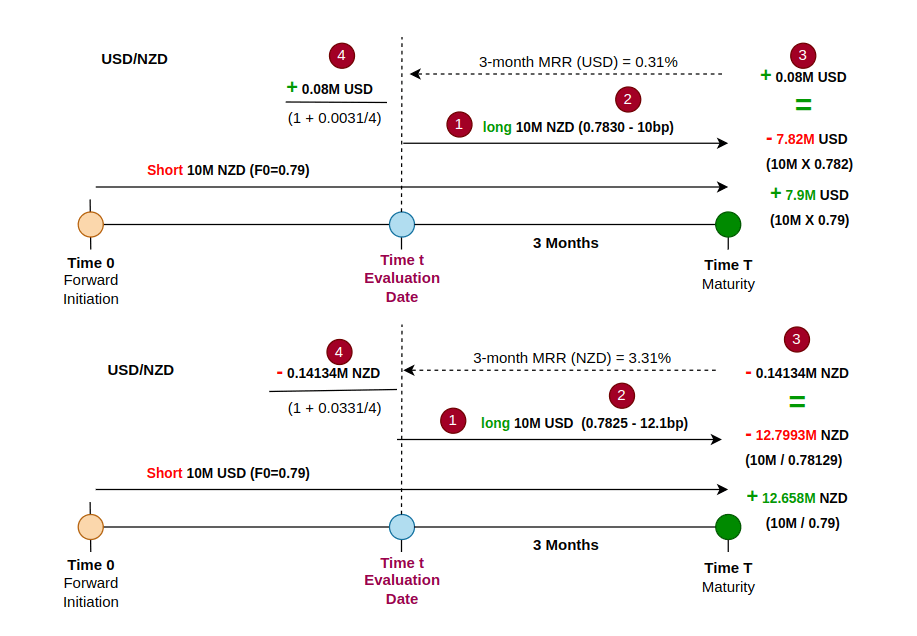
Mark-to-Market (MTM) is the process of valuing an asset, liability, or financial instrument, such as a forex forward contract, at its current market price rather than its book value or historical cost. The calculated MTM value represents the profit or loss that would be realised if the contract were settled at the current market exchange … Continue reading Mark-to-Market of Forex Forward Contract→



 Data Ninjago (Financial Data Architecture)
You must be logged in to post a comment.