Tag: Options

Pricing Callable and Putable Bonds with QuantLib

Pricing Callable and Putable Bonds with QuantLib

The valuation and analysis of bonds with embedded options is the most focused topic discussed in the CFA Level 2 Fixed Income curriculum. These types of bonds, such as callable and puttable bonds, introduce an additional layer of complexity due to the optionality features embedded within the instrument. In this blog post, I will discuss … Continue reading Pricing Callable and Putable Bonds with QuantLib

Implied Volatility Calculation

Implied Volatility Calculation

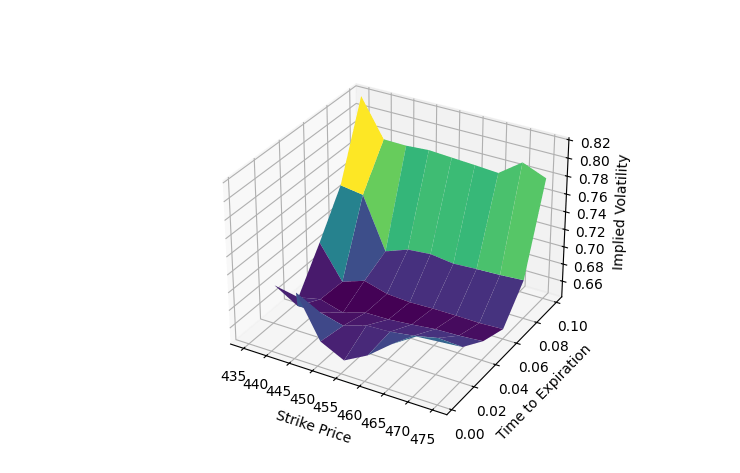
Implied volatility (IV) is a key metric in options trading and risk management. It is derived from the market price of an option and reflects the market's consensus view on the expected future volatility of the underlying asset. There is a lot of information that can be interpreted from IV. For example, high IV often … Continue reading Implied Volatility Calculation

Dynamic Delta Hedging with DolphinDB

Dynamic Delta Hedging with DolphinDB

Delta hedging is an options trading strategy used to maintain a delta neutral position by ensuring that the overall delta of a portfolio is zero, so that the price fluctuations of the underlying asset do not significantly impact the position’s value. Dynamic delta hedging involves continuously adjusting the hedging position to account for changes in … Continue reading Dynamic Delta Hedging with DolphinDB

Real-Time Option Greeks Calculation with DolphinDB

Real-Time Option Greeks Calculation with DolphinDB

In the previous blog post, we explored option Greeks calculations using the BSM model. In this post, I’ll have some coding fun by implementing real-time Greeks calculations with the formulas from the last post, but this time using the DolphinDB stream processing framework. Here, I plan to mimic a portfolio consisting of option contracts with … Continue reading Real-Time Option Greeks Calculation with DolphinDB

Options Greeks

Options Greeks

Options Greeks are key metrics used in options trading and risk management to measure how sensitive an option's price is a series of factors, including: Delta - measures the sensitivity of an option's price to the changes in the underlying asset's price. Gamma - measures the change rate of an option's Delta in respect to … Continue reading Options Greeks

Interest Rate Options Valuation

Interest Rate Options Valuation

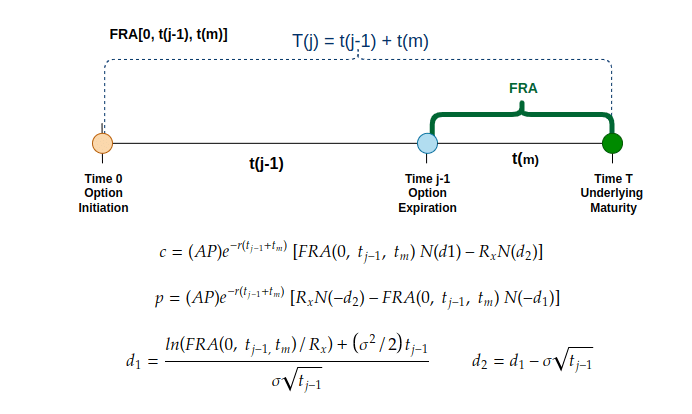
Interest rate options are options based on interest rates, where the underlying asset is a reference interest rate, typically in the form of a Forward Rate Agreement (FRA). For instance, an interest rate call option on a 3-month MRR (market reference rate) with 9 months to expiration would have a 3-month FRA rate expiring in … Continue reading Interest Rate Options Valuation

Futures Options Pricing with Black Model

Futures Options Pricing with Black Model

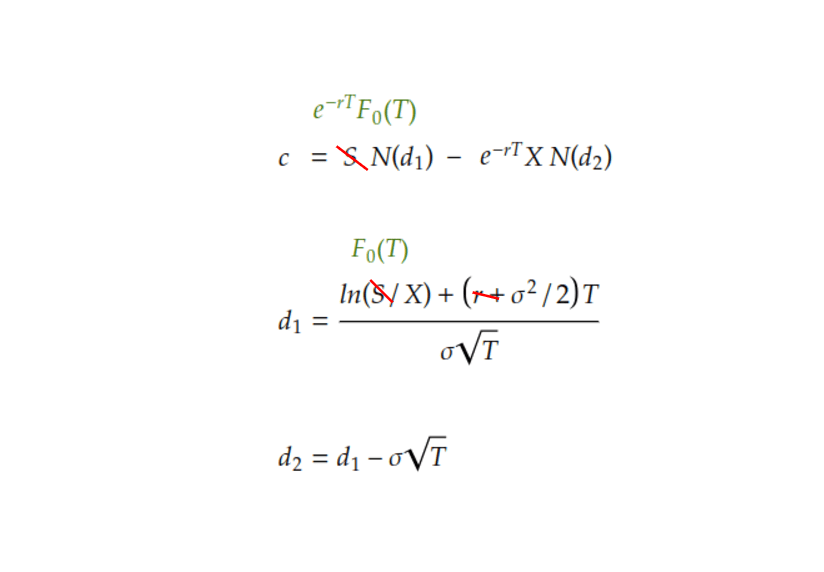
In the last blog post, we explored the Black-Scholes-Merton model and learned that it is the industry standard for pricing option contracts. However, the BSM model is designed for options on stocks and similar spot market assets, and it is not directly applicable for pricing futures options contracts, mainly due to the following differences between … Continue reading Futures Options Pricing with Black Model

Black-Scholes-Merton (BSM) Model

Black-Scholes-Merton (BSM) Model

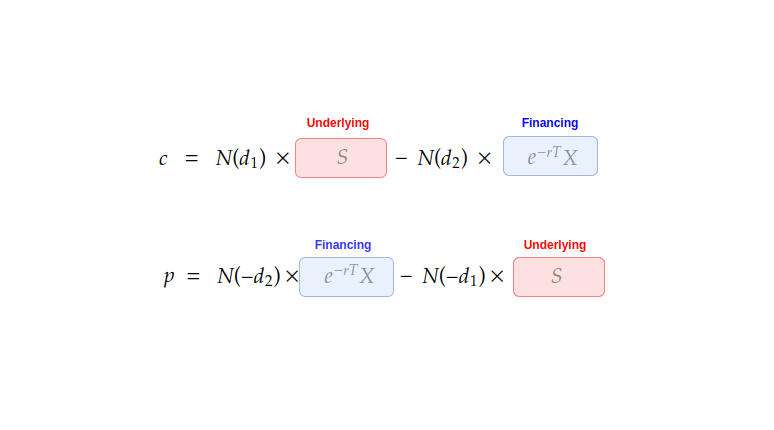
In the previous blog post, we saw that the binomial model closely approximates option prices as the number of periods increases. The binomial model is known for its flexibility, intuitiveness, and fewer assumptions. So, why do we still need the Black-Scholes-Merton (BSM) model for option pricing, especially given its restrictive assumptions? One of the main … Continue reading Black-Scholes-Merton (BSM) Model

From Binomial Model to BSM

From Binomial Model to BSM

To kick off this blog post, let's start with a quick experiment where we compare option prices derived from the binomial model with increasing periods to those calculated using the Black-Scholes Model (BSM). Here, we run two sets of option pricing calculations. In the first set, we use the multi-period binomial model, calculating the option … Continue reading From Binomial Model to BSM

Options Pricing with Multi-period Binomial Model

Options Pricing with Multi-period Binomial Model

With the foundational concepts introduced in the previous blog post on the one-period binomial model, along with the path tracing and backward induction covered in the post on the two-period binomial model, we can now move to the multi-period binomial model, which is applicable to real-world scenarios. Once you understand how the one-period and two-period … Continue reading Options Pricing with Multi-period Binomial Model